
Power smart bingo
Through engaging classroom and at-home challenges, students will build energy literacy, practice conservation, and develop lifelong Power Smart habits.



Overview
This activity encourages students to develop lifelong energy-saving habits, build an understanding of how energy is used, and become active participants in creating a more sustainable future. As students work toward completing their bingo card, they will learn that small actions, practiced consistently, can have a lasting impact.
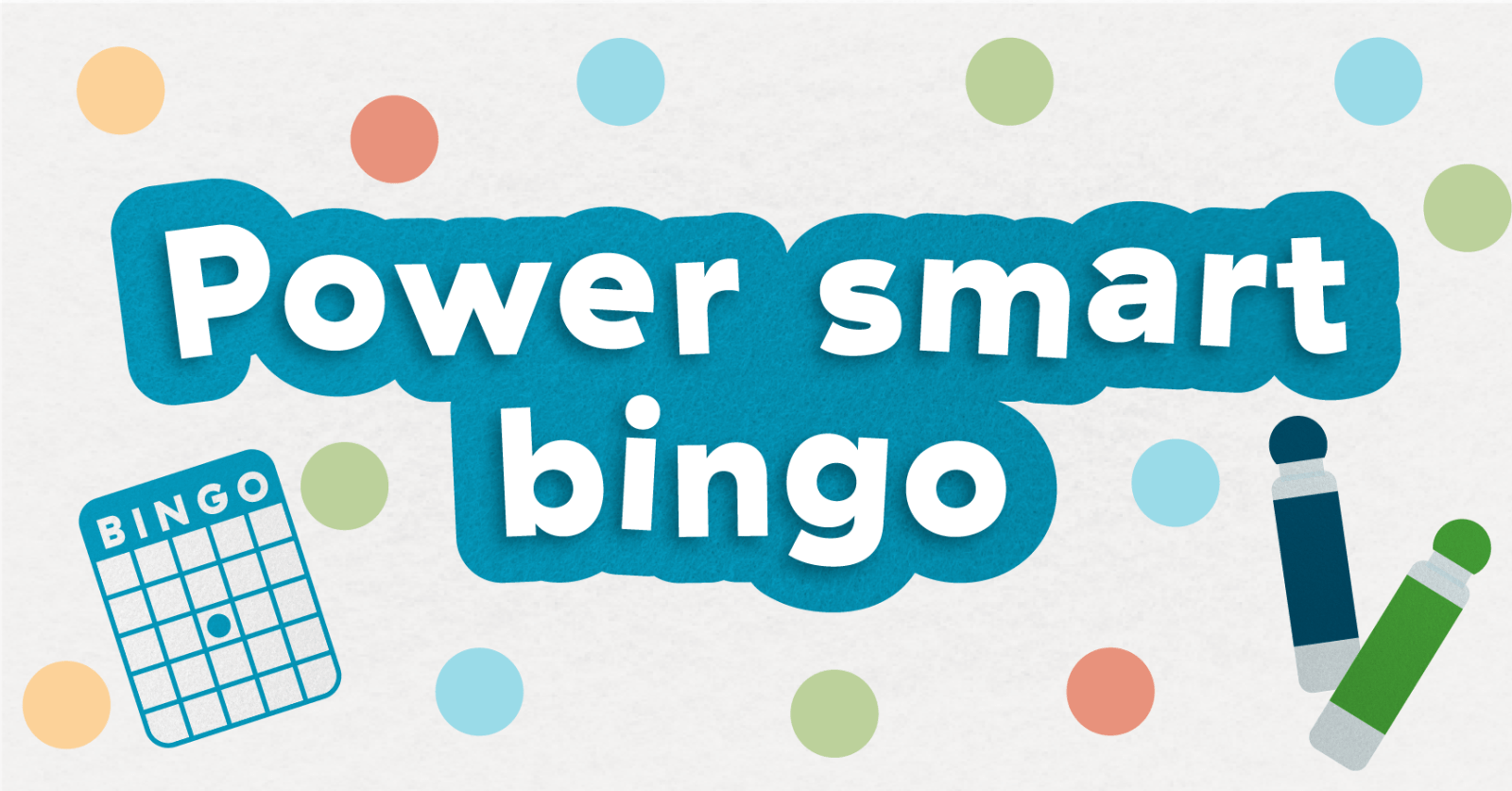
Power smart bingo contestOctober is Power Smart Month! We're challenging classes around B.C. to rise to the Power Smart Bingo challenge. Complete bingo squares with your class during the month of October to enter our contest and win great prizes for your class. Prizes range based on card completion, choose from four corners, a single line, an X or a full card blackout! See contest page for prize categories, full contest rules and to enter. |
Instructions
What you'll need
- Bingo Card
- Power Smart Bingo Slideshow
*Note: the Bingo card is designed as a classroom challenge, but you can adapt the rules in some of the squares to assign it as an individual challenge. It was also designed as a single card design to provide progressional challenges as you work towards completing different shapes. From simplest to more involved: four corners, straight line, X, blackout.
Instructions
- Display the bingo card and outline the challenge to the class, illustrating the different levels of achievement: four corners, straight line, X, blackout. Ask students what they think the different challenges in the squares are asking them to do.
- As a class, invite students to brainstorm current energy use:
- Where do they use electricity in the classroom? At home? In their everyday lives?
- What devices are using electricity? Which are using the most?
- What energy-saving habits are they already practicing?
- Bring up the slideshow and review the instructions for the different bingo card challenges. As you go through the slides, invite students to note down any ideas or questions they have. Review brainstormed strategies as a class.
- As a class, create a plan and set goals for tackling the challenge. Consider:
- How are you tracking progress?
- What everyone’s responsibilities and roles are
- How will you celebrate progress?
- Set a schedule to complete and reflect on challenges.
- Suggested reflection questions as you progress through the challenge:
- What did you learn about how energy is used in the classroom? At home?
- What surprised you the most about energy use?
- Where do you think we have the greatest opportunity to save energy?
- Which challenge was the easiest to complete? Why?
- Which challenge was the most difficult to complete? Why?
- How will you change your attitude and electricity habits going forward?
- What advice would you give to another class starting this challenge?
Modify or extend this activity
- Create energy-saving campaign material to share around the school and encourage other classrooms to participate
Create an adapted challenge for students to do with their families at home
Choose something you discovered during the challenge to investigate and research further
Track real data and create a data visualization of energy usage and identify opportunities for saving
Curriculum Fit
On this tab you'll find all connections to the BC curriculum as well as our brief suggestions for assessment.
This activity links to the curriculum in the following areas. You can find more details below.
- Core Competencies
- Grade K-10 Science
- Grade 11 Science for Citizens 11
- Grade 12 Environmental Science
Core Competencies
Communication
Focusing on intent and purpose
Work collectively
Supporting group interactions
Determining common purposes
Thinking
Evaluating and developing
Analyzing and critiquing
Questioning and investigating
Reflecting and assessing
Personal and Social
Self-regulating
Identifying personal strengths and abilities
Contributing to community and caring for the environment
Resolving problems
Science K-10
Big Idea
Daily and seasonal changes affect all living things (K)
Water is essential to all living things, and it cycles through the environment (Gr.2)
Living things are diverse, can be grouped, and interact in their ecosystems (Gr.3)
Energy can be transformed (Gr.4)
Machines are devices that transform force and energy (Gr.5)
Electric current is the flow of electric charge (Gr.9)
Energy is conserved, and its transformation can affect living things and the environment (Gr.10)
Content
Energy has various forms (Gr.4)
Devices that transform energy (Gr.4)
The nature of sustainable practices around BC’s resources (Gr.5)
Electricity
Generated in different ways with different environmental impacts (Gr.7)
Circuits – must be complete for electrons to flow (Gr.9)
Voltage, current, and resistance (Gr.9)
Potential and kinetic energy (Gr.10)
Transformation of energy (Gr.10)
Curricular Competencies
Questioning and predicting
- Experience and interpret the local environment (K-Gr.2)
- Demonstrate curiosity and a sense of wonder about the world (K-Gr.4)
Make simple prediction about familiar objects and events (Gr.1-Gr.2)
Observe objects and events in familiar contexts (K-Gr.4
Identify questions about familiar objects and events that can be investigated scientifically (Gr.4)
Demonstrate a sustained curiosity about a scientific topic or problem of personal interest (Gr.5-
Make observations in familiar and unfamiliar context (Gr.5-Gr.6)
Identify questions to answer or problems to solve through scientific inquiry (Gr.5-Gr.8)
Planning and conducting
Make observations about living and non-living things in the local environment (Gr.4)
Collect simple data (Gr.4)
Observe, measure, and record data, using appropriate tools, including digital technologies (Gr.5-Gr.6)
Collaboratively plan a range of investigation types, including field work and experiments, to answer their questions or solve problems they have identified. (Gr.7-Gr.8)
Collaboratively and individually plan, select, and use appropriate investigation methods, including field work and lab experiments, to collect reliable data (Gr.9-Gr.10)
Processing and analyzing data and information
Experience and interpret the local environment (K-Gr.10)
Use knowledge of scientific concepts to draw conclusions that are consistent with evidence (Gr.9-Gr.10)
Evaluating
Make simple inferences based on their results and prior knowledge (Gr.4)
Identify some simple environmental implications of their and others’ actions (Gr.3-Gr.4)
Demonstrate an understanding and appreciation of evidence (Gr.5-Gr.8)
Identify some of the social, ethical, and environmental implications of the findings from their own and others’ investigations (Gr.5-Gr.6)
Consider social, ethical, and environmental implications of the findings from their own and others’ investigations (Gr.7-Gr.10)
Applying and innovating
Take part in caring for self, family, classroom and school through personal approaches (K-Gr.2)
Contribute to care for self, others, school, and neighbourhood through individual or collaborative approaches (Gr.3-Gr.10)
Transfer and apply learning to new situations (K-Gr.10)
Communicating
Share observations and ideas orally (K)
Communicate observations and ideas using oral and written language, drawing, or role-playing (Gr.1-Gr.2)
Express and reflect on personal or shared experiences of place (Gr.3-Gr.6)
Express and reflect on a variety of experiences and perspectives of place (Gr.7-Gr.10)
Science for Citizens 11
Big Ideas
Scientific processes and knowledge inform our decisions and impact our daily lives
Content
Evidence-based decision making through science
Impact of technologies
Beneficial scientific innovations
Actions and decisions affect the local environment
Curricular Competencies
Questioning and predicting
Demonstrate a sustained intellectual curiosity about a scientific topic or problem of personal, local, or global interest
Make observations aimed at identifying their own questions, including increasingly abstract ones, about the natural world
Planning and conducting
Collaboratively and individually plan, select, and use appropriate investigation methods, including field work and lab experiments, to collect reliable data
Processing and analyzing data and information
Use local knowledge to experience and interpret the local environment
Evaluating
Consider social, ethical, and environmental implications of the findings from their own and others’ investigations
Applying and innovating
Contribute to care for self, others, community, and world through individual or collaborative approaches
Contribute to finding solutions to problems at a local and/or global level through inquiry
Implement multiple strategies to solve problems in real-life, applied, and conceptual situations
Communicating
Express and reflect on a variety of experiences, perspectives, and worldviews through place
Environmental Science 12
Big Ideas
Living sustainably supports the well-being of self, community, and Earth
Content
Personal choices and sustainable living
Curricular Competencies
Questioning and predicting
Demonstrate a sustained intellectual curiosity about a scientific topic or problem of personal, local, or global interest
- Make observations aimed at identifying their own questions, including increasingly abstract ones, about the natural world
Planning and conducting
Collaboratively and individually plan, select, and use appropriate investigation methods, including field work and lab experiments, to collect reliable data
Processing and analyzing data and information
Use local knowledge to experience and interpret the local environment
Evaluating
Consider social, ethical, and environmental implications of the findings from their own and others’ investigations
Applying and innovating
Contribute to care for self, others, community, and world through individual or collaborative approaches
Contribute to finding solutions to problems at a local and/or global level through inquiry
Implement multiple strategies to solve problems in real-life, applied, and conceptual situations
Communicating
Express and reflect on a variety of experiences, perspectives, and worldviews through place
Assessments
- Assess students engagement, responsibility, and willingness to contribute to class energy-saving goals.
- Assess students' ability to collect, record, and interpret data through activities.
- Assess students' understanding of energy conservation, their ability to identify successes and challenges, and how their attitudes or habits have changed as a result of the activity.
- Assess students' understanding of energy use through investigations.
- Assess how effectively students work together to develop class plans, establish energy-saving routines, assign responsibilities, and implement solutions that reduce energy waste in the classroom.
Teaching Notes
These teaching notes contain more information on the following topics:
BC Hydro Power Smart Plan 2.0
Energy Literacy
Smart Home Technology
Understanding Peak Demand
Kilowatt-Hours
Energy Conservation vs. Energy Efficiency
Understanding Your School’s Energy Use
What is Power Smart Plan 2.0?
Power Smart Plan 2.0 is BC Hydro's long-term strategy for helping British Columbians use electricity more efficiently. By reducing unnecessary energy use and encouraging conservation-minded behaviours, BC Hydro can help meet future energy needs while supporting a reliable and sustainable electricity system. Through Power Smart Bingo, students experience firsthand how individual actions can contribute to larger energy-saving goals.
BC Hydro's Power Smart Plan 2.0 is the utility's largest-ever investment in energy efficiency and conservation. At its core is a simple idea: the most affordable and sustainable energy is the energy we never have to use. Rather than meeting growing electricity demand solely by building new infrastructure, the plan focuses on helping British Columbians use energy more efficiently through conservation, behaviour change, and smarter energy management.
For schools, this means students have an important role to play. Every time a light is turned off, a device is powered down, or a classroom develops more efficient habits, students are participating in the same conservation mindset that supports Power Smart 2.0. While a single action may seem small, collective efforts across classrooms, schools, homes, and communities can result in significant energy savings over time.
These challenges are designed to help students move beyond awareness and into practice, demonstrating that conservation is not just a concept but a daily habit that benefits both individuals and the broader electricity system.
Through inquiry, collaboration, and hands-on learning, students gain an understanding that using energy wisely helps create a more affordable, resilient, and sustainable future for British Columbia. This connection between individual actions and system-wide benefits is a key principle of Power Smart Plan 2.0
Why Energy Literacy Matters
Energy literacy helps students understand where electricity comes from, how it is used, and why conservation is important. Developing these skills at an early age empowers students to make informed decisions about energy use throughout their lives. Activities in the Power Smart Bingo card encourage students to explore energy concepts through inquiry, observation, and real-world application.
Energy is an essential part of students' daily lives, yet many young people have limited opportunities to explore where electricity comes from, how it is used, and why conservation matters. Energy literacy is the knowledge, skills, and awareness needed to understand energy use and make informed decisions about it.
Building energy literacy helps students see connections between their actions and their impact. When students learn that leaving lights on, keeping chargers plugged in, or powering devices unnecessarily all have energy implications, they begin to recognize opportunities to make more thoughtful choices. Understanding these connections is the first step toward developing lifelong conservation habits.
What is Smart Home Technology?
Smart home technology refers to devices and systems that automatically monitor, manage, or reduce energy use. Examples include smart thermostats, programmable lighting, smart plugs, occupancy sensors, and energy-monitoring devices.
Smart technologies help households and businesses use energy more efficiently by reducing waste and providing better information about consumption patterns. Students may already encounter these technologies at home and can explore how automation can support energy-saving behaviours. While technology can be a valuable tool, it works best when paired with energy-conscious habits.
As electricity demand continues to grow across British Columbia, tools that help customers use energy more efficiently will play an increasingly important role. Power Smart Plan 2.0 encourages a combination of technology, awareness, and behaviour change to create lasting energy savings.
The task"Assess the Benefits of Smart Home Technology at Home and in School" encourages students to explore how technology can support energy conservation. Students can investigate which smart technologies are already present in their homes or schools and evaluate how these tools might help reduce energy waste.
Potential Discussion Questions
What devices in your home already use smart technology?
How could smart technology help save energy in your classroom?
Are there situations where people still need good energy-saving habits even when smart technology is used?
Understanding Peak Demand
Many students understand energy use but may not understand when electricity is used. Peak demand occurs when many people use electricity at the same time. Meeting these periods of high demand requires additional system capacity. By learning about peak demand, students begin to understand that energy conservation is not only about how much electricity we use, but also when we use it.
Ask students to identify times during the day when electricity usage might be highest at home, at school, or across the province.
When people think about energy conservation, they often focus on how much electricity is used. Equally important is understanding when electricity is used.
Students often assume that electricity is always available in unlimited quantities. Learning about peak demand helps them understand how the electricity system must balance supply and demand throughout the day and across seasons.
By reducing energy use during periods of high demand, British Columbians can help ease pressure on the electrical system. This can help defer the need for additional infrastructure and reduce costs over the long term. These ideas are central to the goals of Power Smart Plan 2.0.
The Peak Demand Challenge gives students an opportunity to think beyond simple conservation and consider how energy use patterns affect the larger electricity system. Students can identify activities that could be shifted to different times and discuss how communities work together to use energy more effectively.
Potential Discussion Questions
When do you think people use the most electricity?
Why might electricity demand be higher during very cold days?
How could changing when we use electricity benefit the entire system?
Every Kilowatt-Hour Counts
Students often assume that only large actions create meaningful change. Energy conservation is based on the collective impact of many small actions. Turning off lights, unplugging chargers, reducing unnecessary screen use, and using natural light may seem insignificant on their own, but when practiced consistently by millions of people, these actions create substantial energy savings.
A kilowatt-hour (kWh) is the standard unit used to measure electricity consumption. While students may not need to master the technical details, understanding that electricity can be measured helps make energy conservation more tangible.
Turning off a classroom projector, unplugging an unused charger, or using natural light instead of artificial lighting may not seem significant on their own. However, when these actions are repeated every day by thousands of students and families across British Columbia, the energy savings become substantial.
Since the launch of Power Smart, energy-saving actions taken by British Columbians have collectively reduced electricity demand by thousands of gigawatt-hours each year, demonstrating the power of small actions multiplied across many people.
Many activities on the bingo card, including Charger Patrol, Last Person Out Challenge, 30-Minute Energy Challenge, and Power Smart Pledge, focus on everyday actions. Together, these challenges help students see how consistent habits can create meaningful energy savings.
Potential Discussion Questions
What are some small actions that help save energy?
Why do small actions become important when lots of people do them?
Which classroom habits could save the most energy over a school year?
Energy Conservation vs. Energy Efficiency
These terms are often used interchangeably but have different meanings.
Energy Conservation
Energy conservation means using less energy by changing behaviour or habits.
Examples:
Turning off lights when leaving a room
Powering down computers at the end of the day
Unplugging unused chargers
Using natural light whenever possible
Conservation focuses on the choices people make.
Energy Efficiency
Energy efficiency means using technology or equipment that requires less energy to perform the same task.
Examples:
LED light bulbs
Smart thermostats
High-efficiency appliances
Energy-efficient electronics
Efficiency focuses on improving the technology being used.
Why it Matters
Power Smart Plan 2.0 relies on both conservation and efficiency to help meet future energy needs. Efficient technologies can reduce electricity consumption, while conservation behaviours ensure that energy is not wasted. The greatest benefits occur when both approaches are used together.
Potential Discussion Questions
Can you think of an example of conservation at school?
Can you think of an example of energy efficiency at home?
Which saves more energy: better technology, better habits, or both working together? Why?
Understanding Your School's Energy Use
Schools provide excellent opportunities for authentic learning about energy. Students interact with lighting, heating, cooling, technology, and equipment every day. Exploring where energy is used within a school helps make energy concepts tangible and relevant. Schools are excellent places for students to explore real-world energy use because they interact with energy systems every day.
Students often understand that electricity powers the devices they use, but they may not recognize how many systems work together to keep a school operating. Investigating school energy use helps students connect abstract concepts about electricity and conservation to their everyday experiences.
Understanding where and how energy is used is an important first step toward reducing waste. When students understand energy consumption within their own school, they are better equipped to identify practical solutions and opportunities for improvement. This type of learning also builds critical thinking and problem-solving skills. Students move beyond asking, "How can I save energy?" to asking, "Where is energy being used, and what changes could make a difference?"
Potential Reflection Questions
Which systems in our classroom use electricity?
What area of the school likely consumes the most energy?
What changes could help reduce energy use without affecting learning?
Activity Materials
Select what you need below.

1.2 mb • pdf
372.5 kb • pdf
Related activities