Sustainability New

Political sway

Put forward your ideas in a respectful political debate to evaluate clean electricity in B.C.

Activity Image
Grade
10
Duration
1.3 hours
Type
Class discussion

Overview

Explore how electricity is made in B.C. making connections to BC Hydro and Crown corporations. Through a political debate, students create ‘for’ and ‘against’ arguments for three renewable energy proposals: solar, wind and geothermal. The activity is completed with students watching a video to bring these ideas together.

BC Hydro YouTube

Instructions

What you'll need

  1. Start the activity by having a class discussion about different levels of government and their roles and responsibilities in protecting the environment and/or do the activity “Renewable energy and different levels of Canadian government”.
  2. Pull up the ‘Political Sway’ slide show and at slide 2 introduce the concept of Crown corporations. They are public sector organizations established and funded by the government to provide specialized goods and services to citizens.
  3. At slide 3 have students hold up their fingers to answer the question. The answer is revealed on slide 4 that BC Hydro is a Crown corporation. Ask students what service BC Hydro provides in B.C.
  4. At slide 5 share that BC Hydro provides clean renewable electricity in B.C. powered by falling water and it is a provincial Crown corporation, owned by the government and people of British Columbia.
  5. At slide 6 describe how hydroelectric dams generate electricity with falling water turning turbines that create mechanical energy and generators converting this energy into electric energy that travels to our homes via transmission lines. 
  6. At slide 7 share that BC Hydro in 2024 put out a call for renewable energy projects to increase resilience in B.C. Ask students to consider what is the significance of this and who will benefit. Students may say workers will benefit as it will generate jobs, that residents will benefit as electricity bills could decrease and electric supply will be more reliable as it is more diversified, and that First Nations will benefit as nearly all these projects have First Nations majority ownership.
  7.  Put students in groups of 4-5 students and provide each group with a copy of the ‘Political Sway’ student handout. 
  8. At slide 8 share with students that they will participate in a class debate. In their groups have students discuss what ground rules are important for a safe and constructive political debate and record their top three ideas on the handout. 
  9. Get back to Slide 9 after the debate section.

Ground rules for safe debates

As a class have groups share their ideas and record them on the board to guide a safe debate. 
  • Students ground rules may include: one person speaks at a time, no personal attacks, listen to understand, not just to respond, use respectful language for example “I see it differently because” and stay focused on issues not individuals.


Let’s debate

Next have students discuss the three scenarios on their handout and in groups create ‘for’ and ‘against’ arguments. The following are the scenarios for debate. The teacher notes include our ideas ‘for’ and ‘against’ if students need additional hints.

Scenarios: 

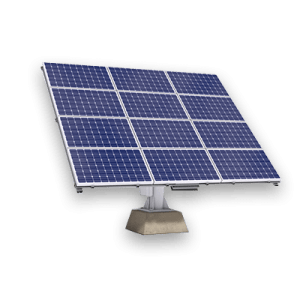
  1. A town in B.C. has built a new parking lot and sold it to a parking company. The municipal government in this town is proposing to re-invest the profits and build a solar farm on the south of the town to benefit the residents living in this area. Are you for or against this strategy and why? 
  2. A 2 square km farm in B.C. is proposing to build a wind farm on this land while continuing farming operations. This has potential for wind turbines generating 10-50 MW and powering 25,000 homes. Are you for or against this development and why? 
  3. British Columbia's geothermal energy potential is high, due to its location on the Pacific Ocean's "Ring of Fire" and the presence of several volcanic regions.  Geothermal resources have been identified in various areas and exploration is ongoing, but no geothermal power plants have been developed yet. Are you for or against development of geothermal power plants and why? 


Now as a class debate the three scenarios. Choose two groups and flip a coin to determine which group speaks ‘for’ and which ‘against’ the first statement. Allow group members to nominate a lead speaker. Groups then debate back and forth making their case. Repeat for this process for all three scenarios so all groups have a chance to participate.  

Finally, at slide 9 have students reflect on the political debate considering if they felt respected during the debate and if any debate discussions shifted their point of view.

Modify or extend this activity

  • Pull up the “Energy and Politics” activity to continue this unit “Political Influence”.
  • Watch a current political debate with the class

Curriculum Fit

Social Studies 10

Big idea 
  • The development of political institutions is influenced by economic, social, ideological, and geographic factors

Content

  • Environmental, political, and economic policies

Competencies

  • Use Social Studies inquiry processes and skills to ask questions; gather, interpret, and analyze ideas; and communicate findings and decisions

Assessments

  • Assess students’ understanding of Crown corporations and how electricity is generated in B.C.  
  • Assess students’ group work co-operation and collaboration in creating the ‘for’ and ‘against’ arguments for the debate.
  • Assess students’ ability to create and follow the debate ground rules.

Teaching Notes

BC Hydro electric generation system

How power is generatedBC Hydro generates power by harnessing the power of moving or falling water to produce mechanical/electrical energy. For more information please visit Hydro electric generation system at BC Hydro website.

Province takes energy action to electrify economy, increase resilience

Check out this news article from the BC Government regarding new solar and wind energy projects: Province takes energy action to electrify economy, increase resilience

Conducting a debate

The following PDF explains how to conduct a structured classroom debate, including teams supporting and opposing an issue, rules, preparation steps, and how to guide and assess student participation in the discussion.

Conduct a debate PDF file

Renewable energy scenarios and examples of ‘for’ and ‘against’ statements:

Scenario 1: A town in B.C. has built a new parking lot and sold it to a parking company. The municipal government in this town is proposing to re-invest the profits and build a solar farm on the south of the town to benefit the residents living in this area. Are you for or against this strategy and why? 

“For” the strategy

  • Solar energy is a renewable source that reduces environmental impacts of fossil fuels
  • Increases the town’s clean energy supply and lowers reliance on fossil fuels
  • Supports provincial and national climate goals by lowering greenhouse gas emissions
  • Profits from selling the parking lot are being reinvested to benefit the community
  • An increased supply of renewable electrical energy could lead to lower electricity bills for residents
  • Could inspire other communities to build their own solar farms
  • Having a local energy source adds resilience in case of power disruptions from other parts of the grid

 “Against” the strategy

  • Land sold may have been valuable for future city development
  • Only residents in the south part of town directly benefit, which could seem unfair to others
  • Municipality loses future revenue that could have been generated from operating a paid parking lot
  • Solar panels often use lithium batteries that are sometimes sourced from regions with poor worker conditions
  • Even if the upfront cost is covered by the profits from selling the parking lot, there is still ongoing maintenance and upkeep that requires taxpayer dollars

Scenario 2: A 2 square km farm in B.C. is proposing to build a wind farm on this land while continuing farming operations. This has potential for wind turbines generating 10-50 MW and powering 25,000 homes. Are you for or against this development and why? 

“For” the development:

  • Wind energy is a renewable source that reduces environmental impacts of fossil fuels
  • Supports municipal, provincial, and national climate goals by lowering greenhouse gas emissions
  • Increased supply of renewable electrical energy could lead to lower electricity bills
  • Land will become more productive as it will be used for food and energy generation
  • Helps prevent potential deforestation and land loss as other clean energy projects such as hydro electric dams can lead to habitat loss
  • Powering 25,000 homes is an impressive amount of people to benefit from this development
  • As this is a large project, may create local jobs in construction, maintenance and operations

“Against” the development:

  • Wind farms can disrupt birds and bats
  • Wind turbines are sometimes considered unattractive and destroy the beauty of rural landscape, potentially decreasing property values of nearby residents
  • Wind turbines can be loud which may affect residents and animals
  • Upfront cost of project could be very expensive


Scenario 3: British Columbia's geothermal energy potential is high, due to its location on the Pacific Ocean's "Ring of Fire" and the presence of several volcanic regions.  Geothermal resources have been identified in various areas and exploration is ongoing, but no geothermal power plants have been developed yet. Are you for or against development of geothermal power plants and why? 

“For” the development:

  • Geothermal power produces very low greenhouse gas emissions, offering an alternative to fossil fuels
  • British Columbia’s population continues to rise and we need to meet the demand by increasing all available renewable energy sources including developing geothermal power plants
  • To meet the provincial climate goals, we need to switch from fossil fuels to electrical energy in areas such as transportation and building heating. This will increase our provincial demand for electricity and therefore we must develop geothermal power plants
  • Create jobs and boost the provincial economy
  • With excess clean energy supply we could sell to other provinces or the United States of America increasing our provincial revenue
  • Geothermal power is more reliable compared to other renewable energy sources such as wind and solar which are dependent on the weather conditions
  • British Columbia is in a unique position due to its location near the Pacific Ocean’s ring of fire to develop geothermal energy and technologies that could be shared with other nations increasing international supplies of clean renewable energy and technology
  • Geothermal power plants generally take up less space than solar or wind farms allowing to preserve land for other developments

“Against” the development

  • Hydro electric dams have created an abundant supply of energy in the province already
  • Research into hydroelectric dams is extensive so our priorities should be to do what we are already good at rather than experimenting with new renewable energy sources
  • Lack of experience may cause delays, mistakes and other unforeseen challenges
  • High startup costs
  • Risk of failure if the areas chosen are not as suitable as predicted
  • Drilling into the land could have unintended consequences including disturbing ecosystems, releasing underground gases or even causing earthquakes


Downloads

Select the materials you require for this activity or download all

Join the Power Smart for Schools community to access:

  • Email newsletter to keep you up-to-date
  • Special events and contests with great prizes
  • Premium, time-limited education resources
  • Dashboard to organize and save your favourite activities and units
Sign up