



Community updates
Get ready for Electrical Safety Week
May 8, 2026
12 min read
BC Hydro is promoting Electrical Safety Week during May 11–15, 2026. We hope you’ll join us in teaching students important safety lessons during this time.
Read on to learn more about Electrical Safety Week, our fun contest, the updated unit of K-7 activities, and more!
What Electrical Safety Week is all about
Every May, Power Smart for Schools recognizes Electrical Safety Week where we promote critical electrical safety lessons to students and encourage everyone to remember how dangerous electricity can be in certain situations.
During Electrical Safety Week (ESW), we promote resources to bring electrical safety lessons into your classrooms. Many BC Hydro employees visit their children’s classrooms to help spread the word and select presentations happen around the province. Far and wide, we want as many youth as possible to be reminded of important safety lessons during ESW.
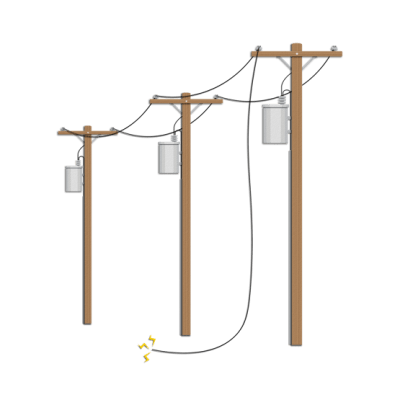
The top message we share for ESW is how to respond to a downed power line. Unlike a raging fire or a speeding car, a fallen power line might not seem that dangerous if you don’t know that thousands of volts of electricity can be flowing through the surrounding ground. If you walk into proximity of the downed line, you may conduct the energy through your body and risk serious injury or fatality.
In particular, we emphasize three key messages to remember.
- Down. Danger. Dial: This memorable phrase reminds students that if a power line is down, it creates a lot of danger, and someone should dial 911 to come handle it right away. A downed power line is an emergency requiring professional intervention.
- Stay 10 metres away: At 10 metres, approximately the distance of a bus, the voltage from a downed line dissipates, so staying 10 or more metres away is how you stay safe. Stay far back from a downed line and prevent others from entering its radius.
- Safety shuffle: In the event that someone finds themselves close to a downed power line, they need to do a safety shuffle to move away. This involves keeping your feet touching, and slowly shuffling forward without lifting or separating your feet. This prevents the electrical current from running through your body.
By creating a fun and memorable experience around these key messages, students (and adults!) will never forget what they’re supposed to do when they see a downed power line.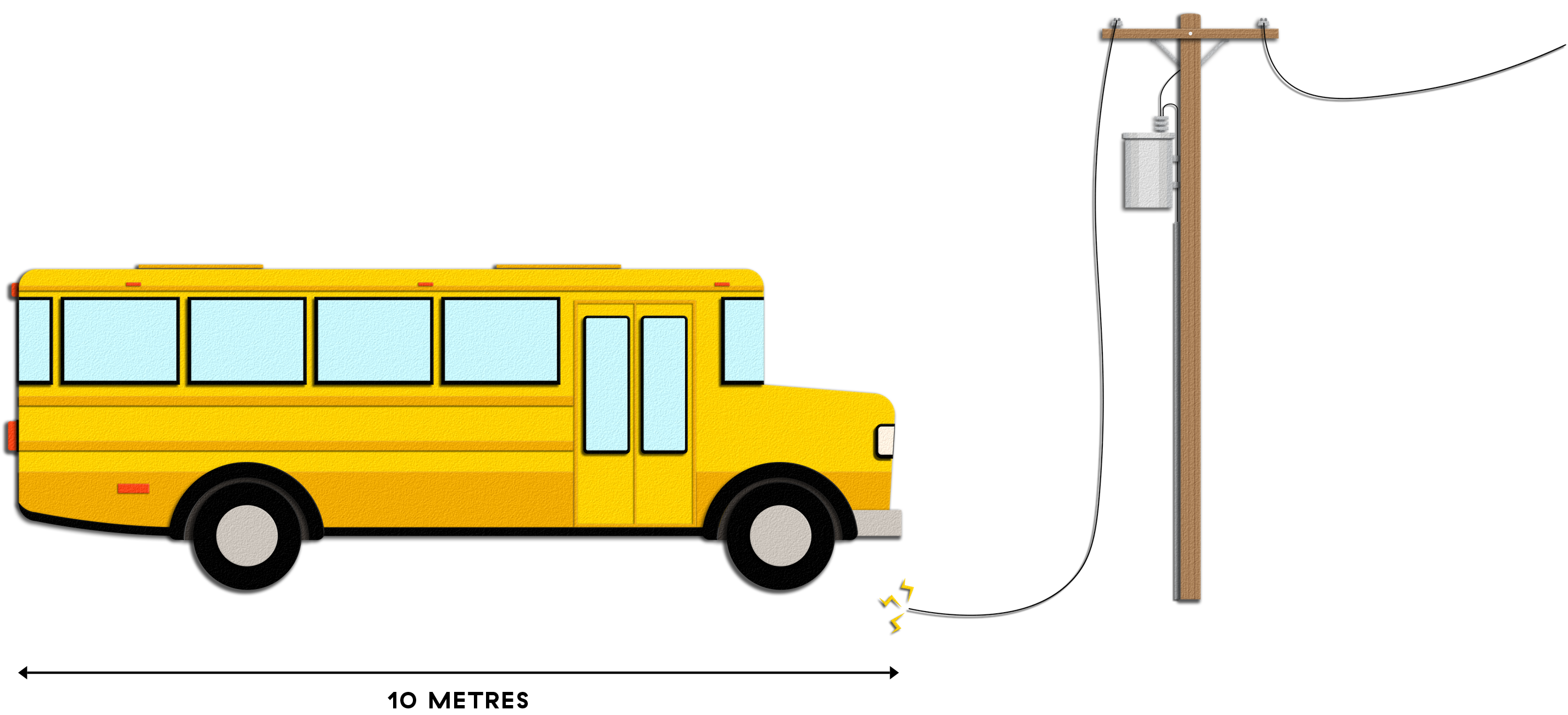
Unit of K-7 safety activities
To help your safety-focused lesson planning, we have a unit which features activities to cover electrical safety with any K-7 class. We’ve updated the unit this year to make it as easy as possible to jump in and cover the most important safety information.
You can mix and match the best combination of activities for your class. For example, the activity How far is 10 metres? guides a K-1 class through measuring 10 metres in different locations to see how well they can start guessing what 10 metres will look like, while Electrical safety announcements gives Grade 4-7 classes a chance to turn safety messages into a PSA.
Check out the unit Electrical safety for K–7 and start your safety lesson planning. If you’re looking for more, continue exploring our library of safety activities.
A contest of great measure
As part of our safety messaging, we often compare the 10 metres you should stay away from a downed power line to one school bus or four jump ropes.
To add a creative spin to ESW, we’re hosting the Measure 10 Metres Contest. For the contest, we want your class to pick their own fun way to visualize what 10 metres looks like and demonstrate it for us. Maybe it’s 200 Hot Wheels cars or 8 bikes? Show us a new and memorable way to remember what 10 metres looks like—bonus points if you can show us your safety shuffle too!
The grand prize will win a $200 gift card toward a pizza party! Two more classes will win a fun set of swag for everyone. Plus, the winning ideas just might be featured on our social media in a video with the notorious Dave & Jaclyn.
Check it out and make sure to read the details carefully when entering. Contest runs May 11 to 27, 2026.
Other safety tips
In addition to safety around downed power lines, there are lots of other safety tips which can be discussed during ESW. You may choose to cover some of these lessons depending on the age of your students and the hazards they’re most likely to encounter.
- Always keep a safe distance from electrical infrastructure including power lines, substations, and transformer boxes.
In particular, it’s not uncommon for kids to play near or even sit on transformer boxes in their neighbourhoods. While a transformer box should be locked and insulated, the fact is they carry a very high voltage of live electricity and so we should stay away from them. - Don’t touch exposed wires.
Exposed wires risk conducting energy through you when you touch them. Make sure to dispose of any cords where the protection around the wire has broken. - Unplug devices by holding onto the plug piece, do not tug on the cord.
Tugging on the cord can break it, which can create a sparking or fire hazard. Tugging the cord can also reveal exposed wire. - Don’t fly kites or drones near power lines.
When a kite flies into a power line, electricity can be conducted through the kite string which can electrocute anyone holding it. Drones can damage power lines, knock pieces down, and create electrocution hazards. - Keep electronics away from water.
When a plugged-in appliance falls into the water, it can electrocute anyone touching the water. Electronics submerged in water can also generate sparks or fire.
More helpful resources
Keep reading in-depth about electrical safety with these resources:
- "How the 'courage to intervene' keeps us safe", from the blog
The latest article on our blog talks about the concept of courage to intervene, which is all about speaking up when your work feels unsafe. It’s not just an inspirational message, it’s a foundational piece of safety training used at BC Hydro and beyond. The post also features other important resources for people of all ages to report unsafe situations. - BC Hydro's Electrical safety site
Browse through our website full of information on electrical safety for the public. This is your source for safety information at home, at work, and everywhere else. - CCOHS Electrical Safety site
More advanced information on electrical safety and hazards from the Canadian Centre for Occupational Health and Safety. They also have a Safety InfoLine to ask questions about workplace safety.
Lesson plan:
Electrical Safety Activities for K-7
Go to unit

Enter to win:

Measure 10 Metres Contest
Enter now
Recent posts

Teacher support | 5 min
Beyond the Orange Shirt

Classroom delighters | 5 min
Cool things for back-to-school

Community updates | 8 min
Welcome to the Summer Break hub
Community updates | 8 min
