



Community updates
How the ‘courage to intervene’ keeps us safe
May 4, 2026
8 min read
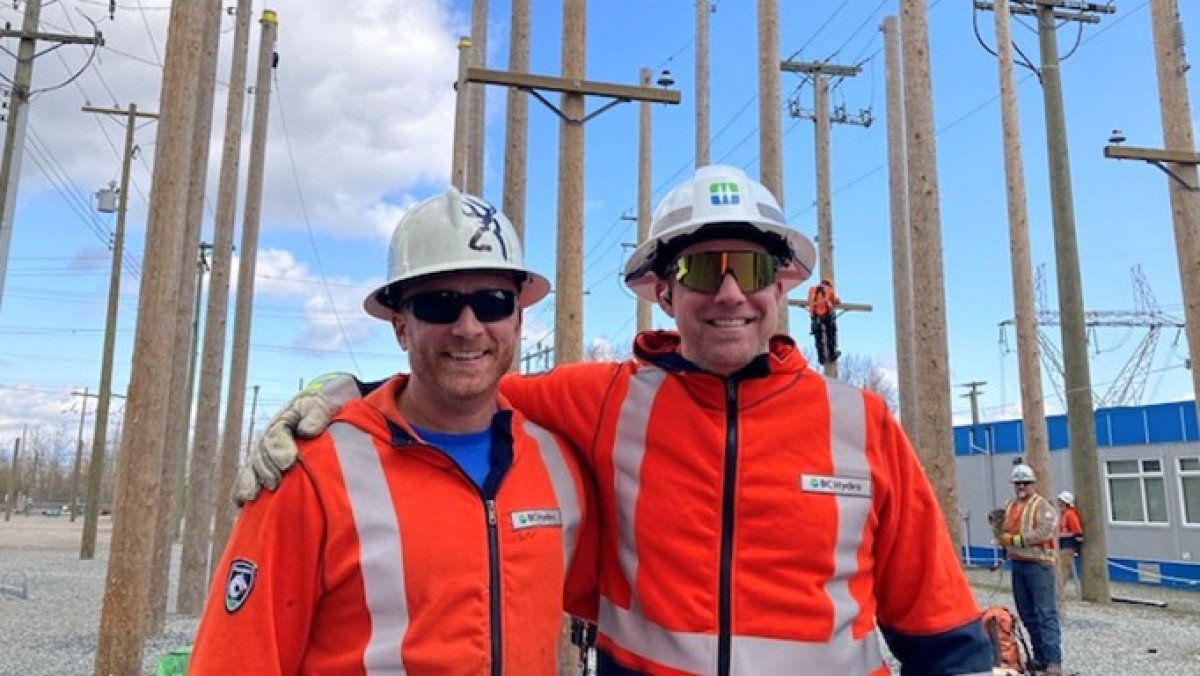
Curt Minard is a living legend at BC Hydro for surviving a near-death electrical shock incident. He followed an order that ran against his instincts, which resulted in being burned severely by 14,400 volts and losing his left hand.
“My intention is never to scare candidates with my story,” says Minard, now a foreman PLT and trades training instructor at BC Hydro’s Trades Training Centre. “My intention is to inform people that this is one of the top 10 most dangerous jobs that you could pick. It isn't for everybody. This job comes with high risk and ever-evolving hazardous situations.”
There was a time when the chance of a PLT dying on the job in B.C. was one in 10. But thanks to a safety-first culture at BC Hydro, and evolving policies including the “Courage to Intervene” standard that was a product of Minard’s harrowing incident, it’s a much safer job today. Courage to Intervene is a core tenet of our Life Saving Rules policy, which mandates that all employees and contractors have the authority and responsibility to stop work if they observe an unsafe act, condition, or someone who is unfit for duty.
The concept of Courage to Intervene emphasizes that it takes courage to stop unsafe situations, meaning you will sometimes risk confrontation or pushback. Everyone has a right to stop work, or any other activity, when something seems unsafe. It’s important to discuss this with students, because safety is one place where it’s critical to stand up for yourself—sometimes even against authority figures.
Taking action in the face of unsafe conditions, behaviour, or decisions isn’t just a cornerstone of work culture at BC Hydro. The spirit of “courage to intervene” drives campaigns and policies aimed at students, including B.C.’s ERASE program “report it” strategy and HereToHelp BC’s education around bystander behaviour.
ERASE provides training for educators and features an anonymous online reporting tool designed to foster safe, caring school communities by preventing bullying, harassment, and violence. HereToHelpBC encourages students to speak up, refuse to join in, support the victim, and report to adults. Make sure your students know about the tools available to them to take action in unsafe situations.
Knowing what to do is key to electrical safety
A BC Hydro survey found that while most B.C. parents worry about electrical hazards inside and outside of the home, only a third discuss electrical safety with their children.
The survey also highlighted a significant gap in electrical safety awareness among B.C. parents. Only a third correctly stated that the proper response to a downed or damaged power line is to stay back at least 10 metres and call 911. And some parents mistakenly believed that posting about the incident on social media was the best course of action.
We offer free, curriculum-aligned electrical safety resources for K-12 students in B.C., with dozens of activities focused on identifying hazards and preventing accidents. Incorporating these activities into your lesson plans gives you an opportunity to identify gaps in knowledge and make sure kids and teens know what to do in hazardous situations.
New this year for students in Grades 10-12 are Rank the Risks: Workplace Safety and Risk to Resilience: Science-Driven Workplace Safety. Through these activities, students can learn to be safety ambassadors and that no one is ‘too young’ to evaluate safety in the workplace and beyond. Assessing safety is also a great way to start thinking like a leader.
Get the word out on electrical safety at summer jobs
The majority of power line incidents that cause serious injuries or fatalities in B.C. involve seasonal workers. Many young workers start summer jobs such as house painting or gutter cleaning without knowing the basics, including “look up and look down to analyze a work site before starting work.” They often aren’t aware of how quickly electrical hazards can escalate, or they believe that their supervisors will always keep them safe.
BC Hydro offers a free self-guided online 45-minute Electrical Safety for Trades and Workers course in multiple languages, which empowers trades workers of all ages to identify the biggest electrical safety hazards. On top of learning to work safely, teens can demonstrate their professionalism and eagerness to learn by learning the basics of assessing safety on the jobsite.
Recent posts

Teacher support | 5 min
Beyond the Orange Shirt

Classroom delighters | 5 min
Cool things for back-to-school

Community updates | 8 min
Welcome to the Summer Break hub
Community updates | 12 min
