



Classroom delighters
Inspiring innovation in the classroom: Lessons from a B.C. ranch
Jan 7, 2026
10 min read
Bo Hedges fell out of a tree onto a stump at age 13, and has since ridden his wheelchair for Canada in four Paralympic Games wheelchair basketball tournaments. But today, he’s talking more about hooves than hoops.
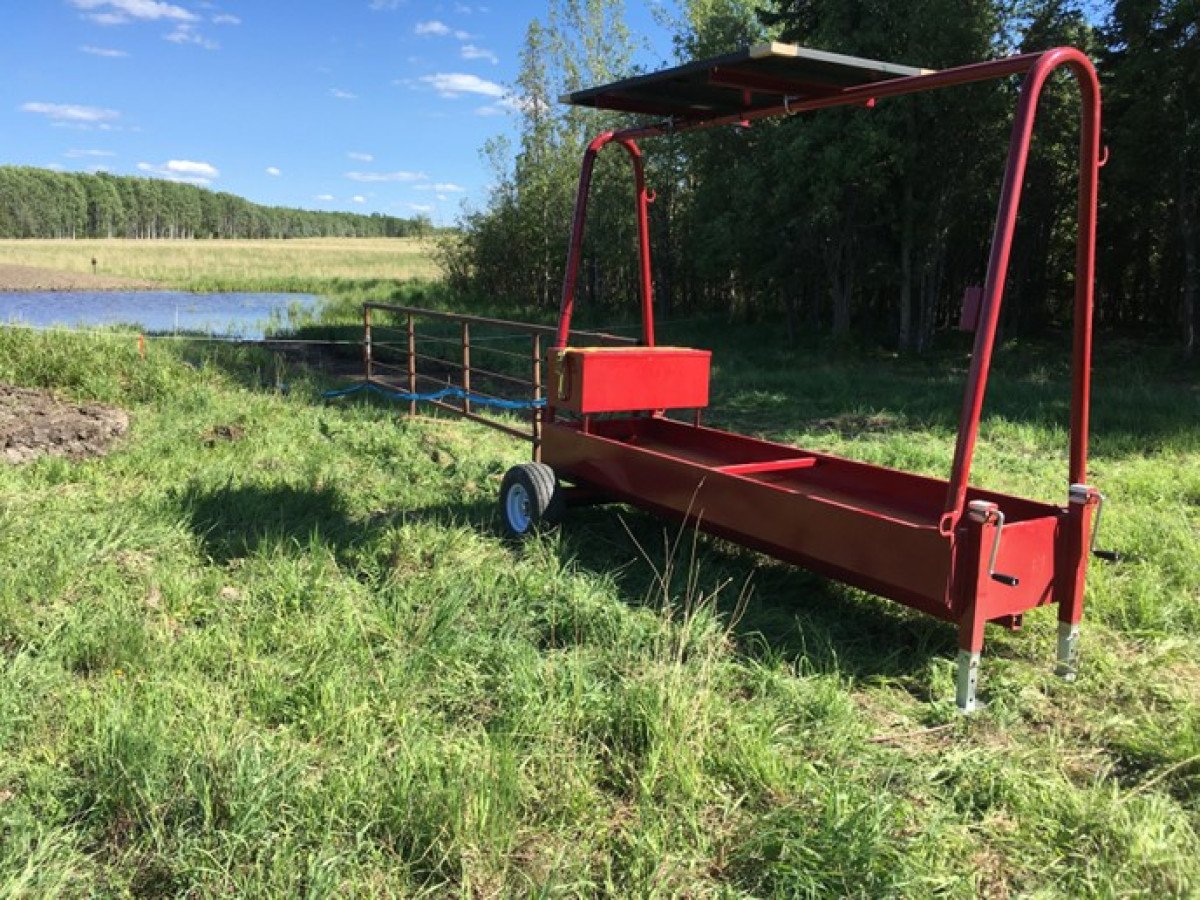
Hedges’ family runs Dead Horse Creek Ranch, about an 80-minute drive north of Fort St. John, B.C. With funding from the BC Hydro Peace Agricultural Compensation Fund, they’ve recently added an innovative mobile system to provide water for grazing cattle on the ranch. And the timing couldn’t have been better, as recent drought in the Peace Region of B.C. has made it more difficult for cattle to access drinking water.
With about 300 head of cattle, the Hedges allow the animals to roam freely on about 2,500 acres of pasture, much of it Crown land they co-manage with the B.C. government. Man-made watering ponds, known as dugouts, serve as the main supply of drinking water, but as summer rolls on, water levels recede and the animals start to walk further and further into the dugouts in search of water.
And that’s where the trouble begins.
“One thing is the water gets dirty—the cows poop and pee in the water, and also drag mud in,” says Hedges, who handles a lot of the paperwork for the family ranch. “Cows can get infections that lead to foot rot, and they can twist an ankle as they try to get in and out of this deep mud.”
Toss in additional challenges, such as cows on some ranches wading into lakes and streams and damaging riparian areas with their manure and saliva, and the industry long ago realized a pump-and-trough water option could help solve numerous issues. But only recently did someone come up with the idea of powering pumps with solar energy, ideal for watering in areas far away from grid power access.
At Dead Horse Creek Ranch, the Hedges also place solar-powered electric fences around dugouts to keep the cows out of the mud until they discover the cleaner water in the solar-powered water buggies. After a few years with the buggies—which are built by an increasing number of Canadian companies including nearby ClearFab in Cleardale, Alberta—Hedges says there’s new vegetation thriving around the dugouts, and the water inside them is much cleaner than before.
Instead of having to take 10 or more head of cattle to the vet for various injuries and infections each year, Hedges says that number has been reduced to two or three per year. Dead Horse Creek Ranch, which produces beef for eating and also sells calves to other ranches, need their cattle as healthy as possible.
“When you’re doctoring fewer cattle, you’re also saving on medicine,” says Hedges. “And you’re exposing fewer animals to antibiotics. It saves time and money, and the animals are healthier.”
With the interview at a Fort St. John café now over, Hedges is off to a local daycare to pick up his daughter. The next morning, he’ll catch a flight to Vancouver and another to Kamloops, where he will take part in a wheelchair basketball club tournament in hopes of maintaining his skills for yet another chance to compete internationally.
Bring innovative thinking to the classroom
Solar-powered water buggies are an elegant example of practical innovation driven by real-world needs.
Ranchers needed a way to give cattle reliable access to clean drinking water in remote grazing areas without electricity, while also protecting creeks, wetlands, and riparian habitat from trampling and contamination. The innovation wasn’t a single breakthrough technology, but the smart integration of existing ones—solar panels, efficient DC pumps, float controls, water storage, and a mobile trailer—into a rugged, portable system that can move with rotational grazing.
Teaching innovation skills and design thinking is increasingly important because it equips students not just to absorb knowledge. It teaches them to create, adapt, and solve real-world problems in a fast-changing world.
Teachers could frame the solar-powered buggies as a design-thinking challenge: What problem are we trying to solve? Who benefits? What constraints exist? Younger students might explore questions such as: How does solar energy turn sunlight into motion? or Why does clean water matter for animals and ecosystems?
One key lesson is that innovation often comes from listening to users, combining known technologies in new ways, and testing solutions in real environments. That’s a mindset students can apply far beyond agriculture.
Made-in-B.C. resources for teachers
Pencil in March 1, 2026 on your calendar. That’s the date of a Science World Steam Teacher Café titled Spring into Tech-Enhanced Nature Education. It’s a 90-minute online session with fellow educators to discuss tools and brainstorm ideas around the responsible integration of technology and digital mediums in environmental education.
Power Smart for Schools offers a wide range of activities around solar power. Here are a few Power Smart for Schools in-class activities that focus on innovation:
- Which innovations have had the most impact? (Grade 10)
Students use the criteria and a thinking strategy to evaluate the impact of technological developments. - Innovation in transportation (Grade 7)
After a slideshow about transportation technologies that reduce greenhouse gas emissions, students explore questions about the future of transportation and its impact on climate change. - Biomimicry and energy (Grades 10-11)
Students learn how nature is leading us to a more energy efficient future and how Indigenous knowledge and traditional ways have integrated nature-inspired principles. - Innovations from women in history (Grades 8-10)
Learn about the amazing women in science, technology, engineering, mathematics and invention, who have blazed trails and led to many of today’s technological advancements.
Recent posts

Teacher support | 5 min
Beyond the Orange Shirt

Classroom delighters | 5 min
Cool things for back-to-school

Community updates | 8 min
Welcome to the Summer Break hub
Community updates | 12 min
