

Tic Tac Flow: How We Generate Hydroelectricity
Play a game of Tic Tac Flow to reinforce the concepts of how we use water to make clean, renewable energy here in B.C.
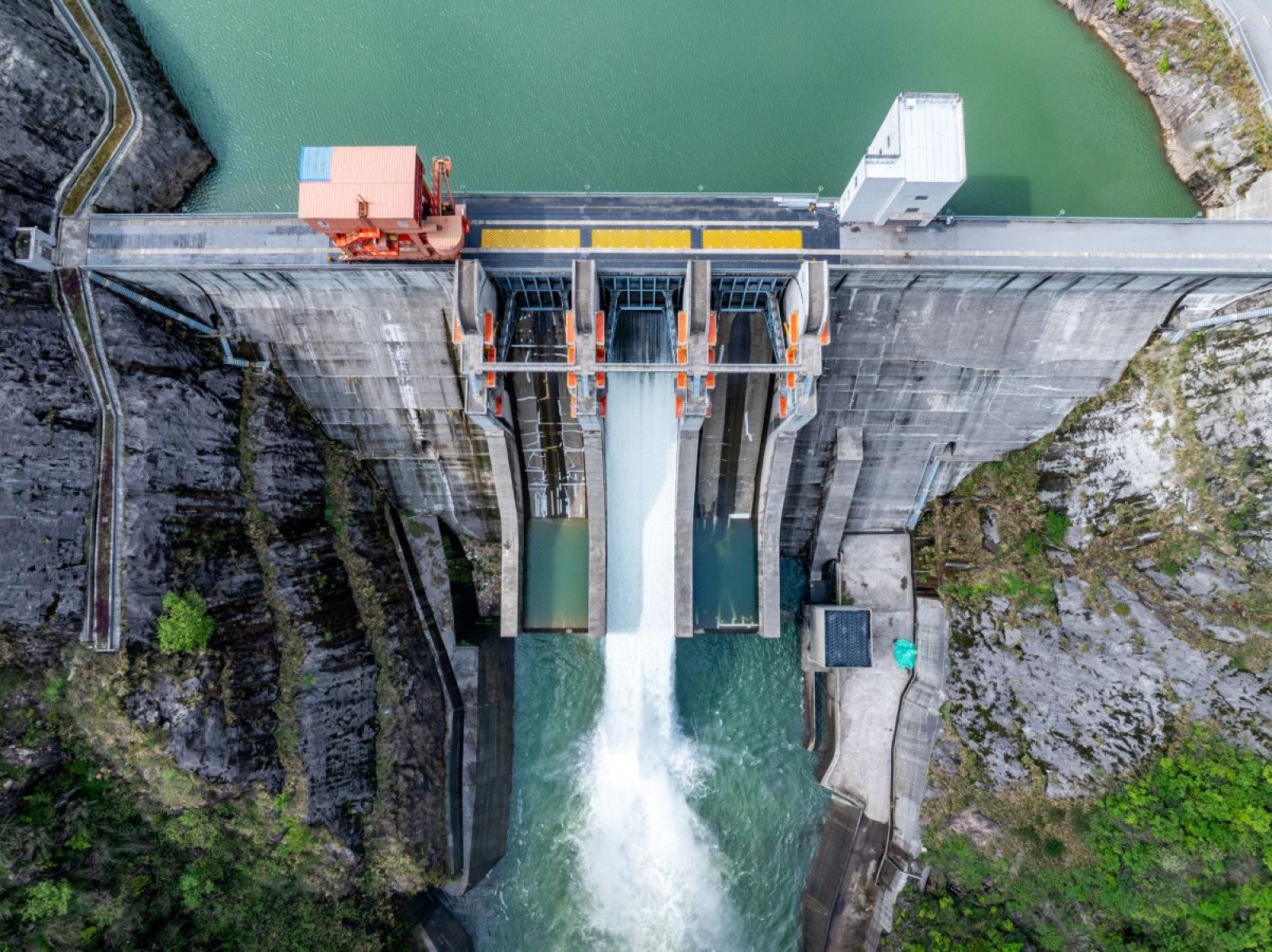



Overview
Begin with a class discussion about natural resources, what we use to make electricity in B.C. and the impact it has on the land. Then, learn about the different steps in generating electricity from water, and play a tic tac toe inspired game to reinforce student’s understanding of the terminology on electricity generation.
Instructions
What you'll need
- Laptop, projector and screen
- “How Does Electricity Power Our Lights Slideshow” Video: https://www.youtube.com/watch?v=rkqEnUKgcYU
- Print “Tic Tac Flow Student Handout” for each pair of students
- Markers or pencil per student
Introduction
- Begin by asking students if they know what electricity is and what things in our lives use electricity?
- Discuss with students the natural resources that are used to make electricity around the world. Define the two categories of natural resources, renewable and non-renewable.
- Ask if anyone knows how electricity is made using one or more of these resources. How does it travel from one place to another? It’s fine if no one knows, as it will be explained in the next section.
- Ask students if they know which natural resource, B.C uses to generate most of the electricity that is usede. If they aren’t sure, prompt them to think about how B.C has a lot of natural water ways (i.e. rivers, lakes) or share the name of our electricity company, BC Hydro.
- Have a discussion with students about:
- How human demand of electricity impacts the land, environment, plants, animals and people. For more detailed examples, see teaching notes.
- How they can reduce demand for electricity with conservation, like charging EVs at off-peak times (night), using energy efficient appliances and unplugging devices when not in use.
Generating Renewable Electricity
- Pull up the “How does electricity power our lights?” slideshow to guide students through the process of making electricity from water.
- Slides 2-9 - Ask volunteers to read out loud the text. Each slide explains one aspect of generating hydroelectricity. The bolded words will be used in a game at the end.
- Slide 2 - Explain to learners the difference between potential and kinetic energy.
- Potential energy is energy stored in an object (water) due to its position relative to other objects.
- For a hydro dam, the reservoir is stored energy at a height above the dam. When the water is released down the dam it is converted into kinetic energy.
- Slide 3 – Explain what a penstock pipe is and that it moves water on a steep incline. When the water travels through the penstock, it builds up a massive amount of force.
- Slide 4 – Share with learners how a turbine is inside a dam, and that it spins with the force of the water.
- Slide 5 - Explain that the spinning of the turbine is generating mechanical energy.
- Slide 6 – Share with learners that the image is an example of a generator. Explain how the flow of electricity is called a current, and travels well through conductive materials like metal. However, electricity does not conduct well with insulators like plastic and rubber.
- Slide 7 – Explain that there are high voltage transmission lines, which can transmit large capacities of electricity over long distances.
- Slide 8 - Explain that at a substation, transformers lower the voltage closer to the destination.
- Slide 9 - Summarize that the electricity we use in our homes is clean, renewable electricity that was generated at a dam somewhere in B.C.
- Slide 10 – Play the video, which will reinforce the information on how electricity is generated, and shows some of the dam locations in B.C.
Tic Tac Flow
- Slide 11 - Put students in pairs. Provide each pair with a copy of the “tic tac flow” student template OR have them draw the grid as shown on the slide. Have students copy the words on the screen, one word in each square.
- Tell students to decide in their pairs who will draw an ‘X’ or “O” in the game and who will begin the game. Explain that you will read a description of one of the bolded words and the class will decide the word that matches the description. They will take turns making their “X” or “O” over the correct match.
- For example if the first student chose “X” and the match is “turbine”, they will draw an “X” through the word “turbine”. If the next match is “penstock” the second student will draw an “O” through the word “penstock”. The winner of the game is the first student to get 3 “Xs” or “Os” in a row.
- Ask students what word matches the description:
- Steep pipe that carries water going very fast, with a huge amount of force. A: Penstock
- The energy that is contained in water in a reservoir, not moving. A: Potential
- The energy that is generated by movement from a high elevation to a lower elevation. A: Kinetic
- A piece of equipment that spins with the force of water, generating mechanical energy. A: Turbine
- The force that makes electrons flow, measuring the difference in electrical charge between two points. A: Voltage
- The energy generated when electrons flow through a conductor which is also called electric current. A: Electrical (we can also call it electricity)
- Equipment that changes electrical energy from high voltage to low voltage. A: Transformer
- The directional flow of electrical energy. A: Current
- The rotational motion of the turbine’s blades creates this kind of energy. A: Mechanical
Modify or extend this activity
- Have students do multiple rounds by turning over the paper and play the game again, or get students to set up multiple grids with the words in different locations to add levels of difficulty to the game.
- Continue this unit with the next activity: “Electricity in our bodies”
- Arrange a school trip to one of BC Hydro’s visitor centres, such as the powerhouse at Stave Falls or the Revelstoke dam: https://www.bchydro.com/community/recreation_areas/visitor-centres.html
- Use the tools and maps on BC Hydro’s website to find the hydroelectric facilities closest to your community and map out how that electricity is travelling to your school: https://www.bchydro.com/energy-in-bc/operations/our-facilities.html
- Explore careers related to power transmission:
Curriculum Fit
Core Competencies
Communication
- Acquiring and presenting information
- Determining common purposes
Thinking
- Reflecting and assessing
- Questioning and investigating
Personal and Social
- Resolving problems
- Identifying personal strengths and abilities
Applied Design, Skills, and Technologies 6
Big Idea
- Complex tasks may require multiple tools and technologies.
Content
- Power Technology
- Power is the rate at which energy is transformed
- Forms of energy
- Energy is conserved
- Devices that transform energy
Curricular Competency
Applied Technologies
- Students examine how electricity generation affects the environment and communities.
- Students lean about the technologies around hydroelectric systems and how they function, including dams, reservoirs, penstocks, turbines, generators, transformers, and transmission lines.
Science 6
Big Ideas
- Energy can be transformed and transferred.
- Everyday materials and devices rely on electricity.
Content
- Forms of energy
- Energy transformation
- Electrical energy
- Sustainable energy source
- Technological systems
Curriculum Competency
Questioning and Predicting
- Students activate prior knowledge and make prediction about definitions.
Processing and Analyzing Data and Information
- Students analyze the sequence of energy transformation in a hydroelectric system.
- Vocabulary sorting and the “Tic Tac Flow” game help students classify and relate concepts.
Applying and innovating
- Students apply scientific understanding to real-life electricity use in BC.
- Learning connects science to local infrastructure and sustainability.
Communicating
- Students demonstrate understanding by using correct scientific language
Social Studies 6
Big Ideas
- Natural resources influence the development and sustainability of communities.
- Economic and environmental decisions have consequences
Content
- Natural resources of British Columbia
- Resource management and renewable energy
- Human modification of the environment
- Infrastructure that supports daily life in BC communities
Curricular Competency
- Students learn from teacher-led discussion, a slideshow, and a video about hydroelectricity and dam locations in British Columbia
- Identifying hydro as B.C.’s main electricity source and why it matters socially, economically, and environmentally
- Tracing the energy system clarifies causes and consequences of energy choices, including land and community impact
- Matching terms to definitions in Tic Tac Flow requires accurate use of conceptual vocabulary; slide reading and the video reinforce evidence-informed explanations
Assessments
- Assess students’ participation in the group discussion and responses to the critical thinking questions.
- Assess students’ collaboration in the game activity.
- Assess understanding of the components of hydroelectric power generation.
Teaching Notes
Electrical Energy or Electricity
Electricity as we commonly use it is the flow of electrons through a conductor, which is called an electric current.
This flow is caused or driven by an electrical potential difference, commonly known as voltage. Voltage acts as an electrical pressure that pushes the electrons in a specific direction. Voltage is comparable to water pressure pushing water through pipes. Similarly, voltage pushes electric charges through wires. The higher the voltage, the stronger the push.
How a Dam Works
For another video with a simplified explanation of how a dam works, check out https://www.youtube.com/watch?v=PvJHjnELVSM&list=PLxO9KsDOEpHKrnSce0rdI6syJkwvV3pZK&index=7
Impacts of electricity demand examples
that we need to use natural resources, like water, to make electricity and that a changing climate means that during some months of the year there are increasing amounts of drought, there might be times when there is not enough water to meet electricity demands. People are also increasing their use of electricity in the summer, with more air conditioning and charging of electric vehicles. If we build more dams, discuss the effect this has on people, land and animals. For example, when land is flooded, there is deforestation and pollution from building infrastructure, people may need to relocate, and First Nations communities may not want a new dam on their land. Compare this to the impacts of burning fossil fuels, like coal, oil and gas. Fossil fuel impacts include air pollution, global warming and oil spills. It’s great that we have clean, renewable electricity here in B.C., and we can be proud of this however we need to take care of this resource.
Renewable & Non-Renewable Energy Sources
Renewable examples
- Water
- Wind
- Sun
- Earth (geo-thermal or geo-exchange)
Non-Renewables examples
- Fossil fuels
- Crude oil
- Petroleum (Gas/Fuel)
- Coal
- Natural Gases

From the unit:

Grade 6
Electricity in the Body
Go to unit