

Electricity in the Body
Compare the movement of electrical signals in human cells with the way electricity moves through transmission lines.
- Grade 6
- 3 activities
- 2 hours
Big idea
Understand electrical signals through body and transmission lines.
Learning objectives
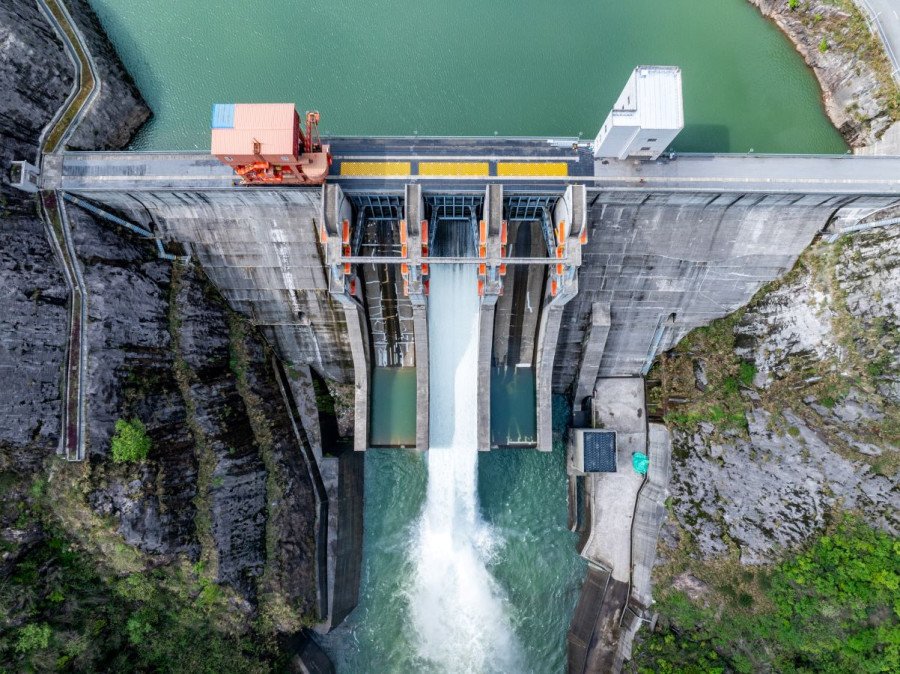
- Activity 1: How does electricity power our lights? - Understand how clean, renewable electricity is generated and transmitted in B.C.
- Activity 2: Electricity in our bodies - Understand how electricity moves in our body acting as the body's communication network to sense the environment and process information.
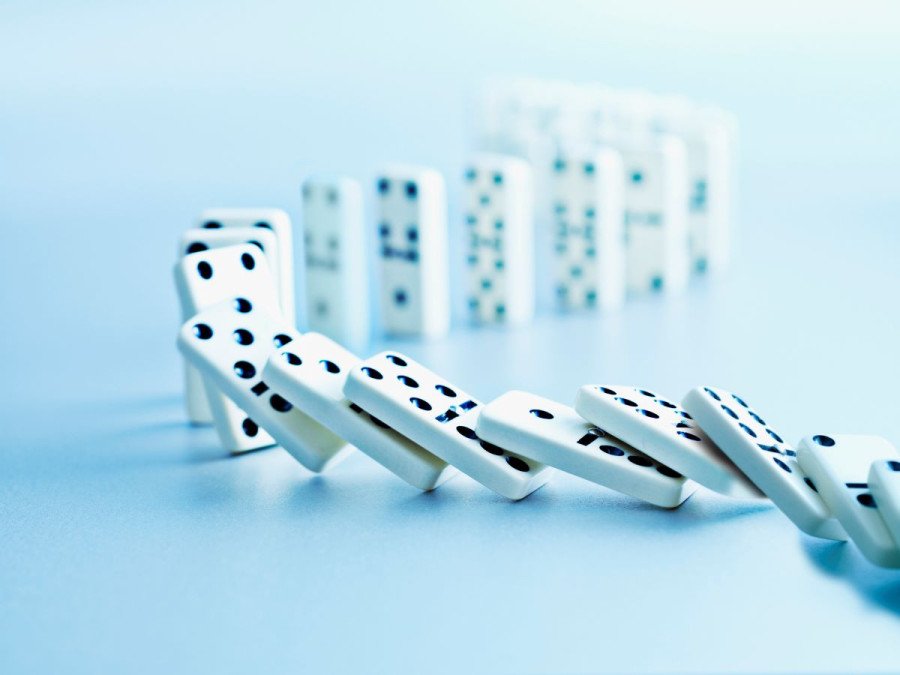
- Activity 3: Electricity and the domino effect - Compare how electricity moves through the body to how it moves through transmission lines and demonstrate the domino effect.
Activities
BC curriculum fit
Tic Tac Flow: How We Generate Hydroelectricity
- Applied Design, Skills, and Technologies 6
- Science 6
- Social Studies 6
Electricity in Our Bodies
- Science 6
Electricity and the Domino Effect
- Applied Design, Skills, and Technologies 6
- Science 6
Assessments
- Assess students’ knowledge of the components of hydroelectric power generation.
- Assess students’ understanding of electricity flowing through our nervous system.
- Assess students’ understanding of the similarities and differences between electricity transmission in the body and in transmission wires.
Background info
Electrical Energy or Electricity
Electricity as we commonly use it is the flow of electrons through a conductor, which is called an electric current.
This flow is caused or driven by an electrical potential difference, commonly known as voltage. Voltage acts as an electrical pressure that pushes the electrons in a specific direction. Voltage is comparable to water pressure pushing water through pipes. Similarly, voltage pushes electric charges through wires. The higher the voltage, the stronger the push
How a Dam Works
For another video with a simplified explanation of how a dam works, check out https://www.youtube.com/watch?v=PvJHjnELVSM&list=PLxO9KsDOEpHKrnSce0rdI6syJkwvV3pZK&index=7
Electricity in the body
The nervous system is your body's control hub, including the brain, spinal cord, and nerves that send messages throughout your body. This network enables thinking, movement, sensing and automatic actions like breathing. Neurons are specialized cells that quickly transmit signals, helping you react to stimuli and learn new skills.
The nervous system is split into the central nervous system (brain and spinal cord, the main computer) and the peripheral nervous system (nerves to the body, carrying info in and out).
Neurons are tiny nerve cells that pass electrical messages to each other. They use ions (charged particles like sodium and potassium) to create tiny electrical signals (voltage) across their membranes; this "action potential" is how they communicate, like a wave of electrical charge moving down the cell by rapidly opening and closing special channels to let ions rush in and out, sending messages throughout the body. When a neuron is quiet, the inside is negative (around -70mV) compared to the outside, called the resting potential.
When you touch something hot, sensory neurons detect the heat and send a "hot" message up your spinal cord to your brain. The brain instantly responds by sending a "move" message back down through your motor neurons to your arm muscles. As a result, you pull your hand away before you even fully realize that it is hot.
Ions are the "currency," voltage is the "electrical potential," and the neuron is the "wire" that uses voltage changes to send rapid electrical messages (action potentials) to other neurons or muscle.
Electricity in the body versus transmission lines
Human cells use ion flow (sodium, potassium, calcium ions) for internal communication (low voltage, DC-like), creating tiny bioelectric signals for nerve impulses while transmission lines carry massive electron flow (AC/DC currents) at high voltages (kV/m), inducing electromagnetic fields (EMFs). The key difference is the mechanism (ions vs. electrons), scale (millivolts vs. kilovolts), and type of field (internal bioelectric vs. external EMFs), with transmission lines having much stronger fields but cells relying on precise ionic signals for life functions.
The Domino Effect in Power Grids
The term "domino effect" is a common metaphor used in electrical engineering to describe a cascading outage or blackout. A single failure (like one domino falling) can trigger a sequence of subsequent failures, eventually causing a widespread interruption of power supply to many people. This real-world phenomenon highlights the vulnerability of interconnected systems and the need for robust safety mechanisms.
Major blackouts are usually caused by cascading contingencies, such as a short circuit, an overloaded component, and a generator outage, with complicated interactions. The vulnerability of the system to (in itself) low-probability incidents that expand to a cascading outage (which is also called the domino effect) increases when the system is already stressed by other causes, such as congested transmission corridors when there is a bulk exchange of power between parts of the system. Quite often, a cascading outage is initiated by forces of nature or by weather conditions such as thunderstorms, extreme temperatures, geomagnetic storms and forest fires. The sequence of events leading to a blackout are usually diverse, but the result is always the same: an interruption of the power supply for a certain period of time.
The Domino Effect in the nervous system
The domino analogy effectively illustrates the mechanical nature of signal transmission and energy transfer in the nervous system, making abstract biological and electrical concepts more tangible. You can find more information and activities on this topic from educational resources like the Exploratorium and Khan Academy.
Storm Preparedness
Check out BC Hydro’s information on how to prepare for storm-related power outages in B.C.
https://www.bchydro.com/safety-outages/power-outages/during-an-outage.html
Adaptions/modifications
Each activity includes suggestions for extensions and modifications for each activity.
