

Electrification and promoting EVs
Discuss the meaning of electrification, research how the world is electrifying, then propose ways to promote electrification with EVs.
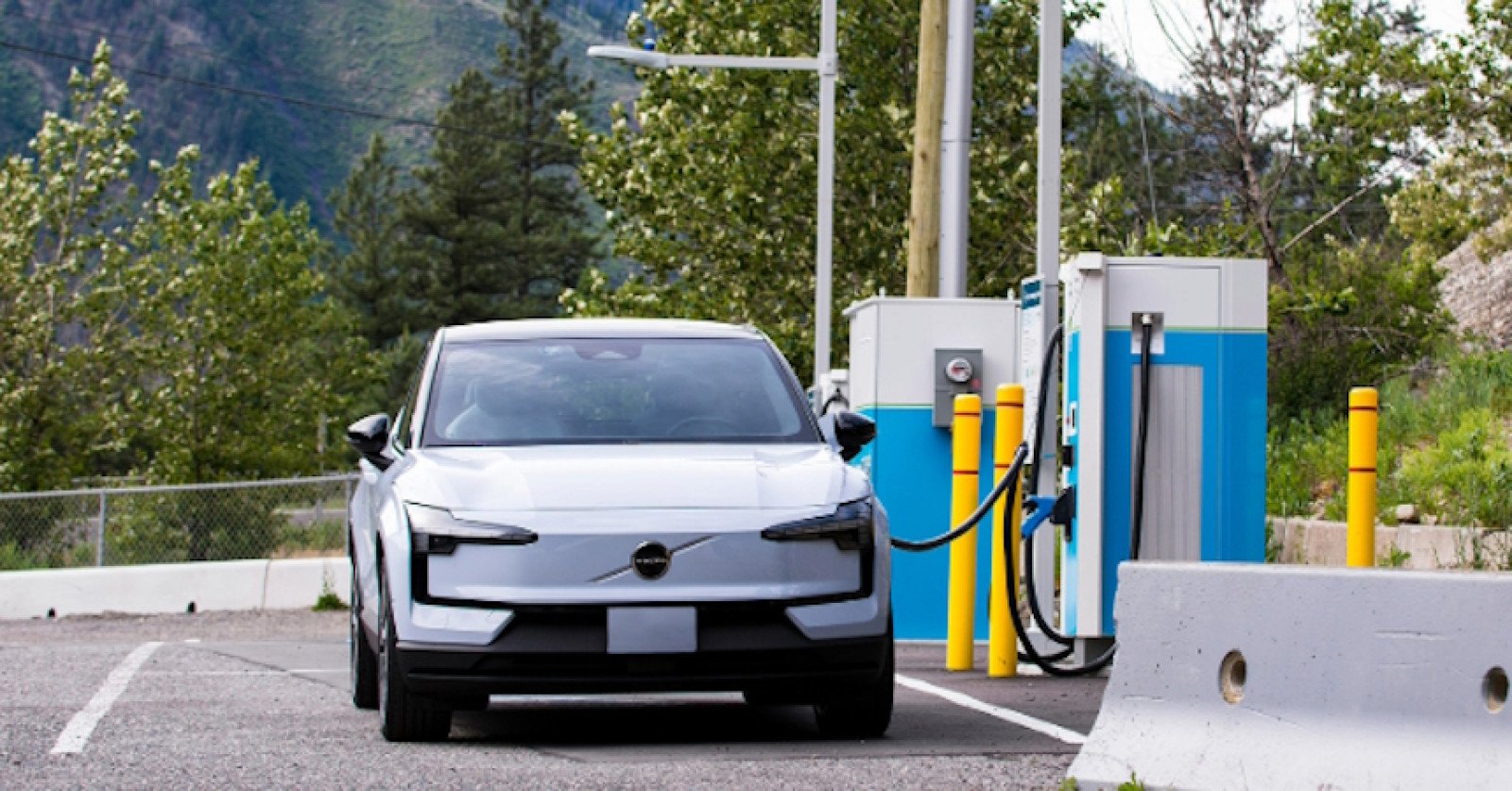



Overview
Electrification is the process of moving power-using activities from fossil fuels to electricity, ideally renewable energy. One the best examples of electrification is switching from gas-powered cars to EVs, which can use cleaner energy sources for fuel.
In this activity, students will research and discuss electrification. Then they will use what they’ve learned to propose ways to promote wider EV adoption.
Instructions
What you'll need
- Electrification Readings (PDF)
- Each student will need an internet-connected device to access the readings list, OR a copy of their assigned reading(s)
Research and discussion
The activity starts with curated readings to learn more about Electrification:
- Introduce Electrification to students (see Teaching Notes for more information), including the benefits of using B.C.’s clean energy and the challenges of using more energy.
- Establish who will form the discussion group. You can engage the whole class together or split into smaller groups. Smaller groups may need more time to review materials.
- Explain that each student will be reading one or more of the provided resources to gather information related to electrification and EVs.
- Divide up the readings from the Electrification Readings list. Give the students time to review their resource(s), take notes, and highlight the most relevant points. This could also be assigned as homework to carry on the discussion in class.
- After the students have taken time to review their resources, get them in a circle in groups or as a class to hold a discussion seminar. Encourage note-taking during the conversation so they can gather inspiration for their own proposal at the end.
- Give each student a chance one at a time to share the resource(s) they looked at and the most interesting details they pulled out.
- Following the sharing, ask students to think about how the points discussed factor into electrification in the community and the province. Encourage them to share their reaction to each other’s readings and connections they’ve made, also both opportunities and challenges they foresee with electrification.
Proposing ideas to promote EVs
Electric Vehicle (EV) adoption is one of the most visible examples of electrification and the easiest for students to approach. With that in mind, you will challenge students to think about ways to promote wider EV usage in their local community or in the province. Their idea can be big or small, and challenging or realistic, original or building on existing ideas.
Follow these steps to guide students through proposing their own ideas to the class:
- Thinking back to your research and discussion, let the class know that they will now propose one or more ways to encourage the use of EVs in B.C. as a step toward electrification. See Teaching Notes for some examples. Their proposed ideas could include:
- Incentives that encourage people to buy and use electric vehicles
- Infrastructure changes and designs that make it easier to adopt EVs
- Regulations that limit the usage of non-EV vehicles where possible
- Other more ambitious ideas, such as new inventions to support EV usage. See teaching notes for more inspirations.
- Give students time to write their idea proposal, in-class or at home, and get read to share their idea with the class.
- Students can propose original ideas or find existing ones to discuss. They can also choose to focus on ‘realistic’ ideas or more ambitious ones.
- Their proposal should:
- explain whether their idea is an incentive, infrastructure change, a regulation, or something else
- explain how their idea promotes EV use
- describe the opportunities and challenges of their idea
- share any existing examples or information to support their idea
- connect the idea to electrification beyond EVs if possible
- Students can propose original ideas or find existing ones to discuss. They can also choose to focus on ‘realistic’ ideas or more ambitious ones.
- Gather the discussion groups back together to share their ideas. Ask students to share each of their ideas and explain how it would promote EV use, and also any challenges that come with it. Give others time to ask questions or build on their ideas.
- Once everyone has shared, give the class one last chance to share their thoughts about promoting electrification through EVs. Ask if any new ideas came to mind after hearing everyone’s proposals. Encourage them to share where they see the most opportunity and the most challenges.
Modify or extend this activity
Electrification proposals: As a more challenging version of the activity, students can propose ideas beyond EVs to promote electrification. They could address domains like industry, heating and cooling, energy generation, or anything else relevant to the topic.
Written proposals: As an alternative to discussing proposal ideas, the proposal stage can be assigned as a written project. Below are some suggested guidelines for written proposals:
- Briefly explain what electrification is
- Describe how B.C. is electrifying and why
- Identify one challenge or opportunity in electrification
- Propose how to address that challenge or opportunity
- Include examples of a similar or related solution in action, in Canada or abroad
- List sources used
Curriculum Fit
Applied Design, Skills, and Technologies 6-9
Big Ideas
- Design can be responsive to identified needs (Gr. 6-8)
- Social, ethical, and sustainability considerations impact design (Gr. 9)
Content
- Energy transmission and applications
- Recognition of a market need and identification of target market
- Renewable and non-renewable sources of energy
- Uses of power technology
Curricular Competencies
Defining
- Choose a design opportunity
- Identify criteria for success, intended impact, and any constraints
Ideating
- Take creative risks in generating ideas and add to others’ ideas in ways that enhance them
- Evaluate personal, social, and environmental impacts and ethical considerations
- Critically analyze and prioritize competing factors, including social, ethical, and sustainability considerations, to meet community needs for preferred future
Sharing
- Reflect on their design thinking and processes
- Identify new design issues
Social studies 8-10
Big Ideas
- Human and environmental factors shape changes in population and living standards
- Changing ideas about the world created tension between people wanting to adopt new ideas and those wanting to preserve established traditions
- Emerging ideas and ideologies profoundly influence societies and events.
Content
- Scientific and technological innovations
- Philosophical and cultural shifts
- Environmental, political, and economic policies
Curricular Competencies
- Use Social Studies inquiry processes and skills to ask questions; gather, interpret, and analyze ideas; and communicate findings and decisions
- Determine which causes most influenced particular decisions, actions, or events, and assess their short-and long-term consequences
Science for Citizens 11
Content
- impact of technologies
- beneficial scientific innovations
- actions and decisions affecting the local and global environment
Curricular Competencies
Planning and conducting
- Assess risks and address ethical, cultural, and/or environmental issues associated with their proposed methods
Applying and innovating
- Contribute to care for self, others, community, and world through individual or collaborative approaches
- Contribute to finding solutions to problems at a local and/or global level through inquiry
- Implement multiple strategies to solve problems in real-life, applied, and conceptual situations
Evaluating
- Consider the changes in knowledge over time as tools and technologies have developed
- Consider social, ethical, and environmental implications of the findings from their own and others’ investigations
- Assess risks in the context of personal safety and social responsibility
Environmental Science 12
Big Ideas
- Living sustainably supports the well-being of self, community, and Earth
Content
- Personal choices and sustainable living
- Global environmental ethics, policy, and law
Curricular Competencies
Evaluating
- Consider the changes in knowledge over time as tools and technologies have developed
- Consider social, ethical, and environmental implications of the findings from their own and others’ investigations
- Assess risks in the context of personal safety and social responsibility
Applying and innovating
- Contribute to care for self, others, community, and world through individual or collaborative approaches
- Co-operatively design projects with local and/or global connections and applications
- Contribute to finding solutions to problems at a local and/or global level through inquiry
- Implement multiple strategies to solve problems in real-life, applied, and conceptual situations
Assessments
- Assess students' ability to draw important information from the electrification readings.
- Observe students' comfort levels in sharing information and ideas, responding to questions, and building on ideas.
- Encourage and reward ambitious ideas that question current norms; also reward pragmatic thinking for realistic changes.
- Assess the students' understanding of electrification and the role that EVs play after the activity.
Teaching Notes
Electrification is the process of switching areas of energy usage from other fuel sources to electricity, ideally clean renewable energy. Examples of electrification include switching to EVs or using electric heating instead of gas.
Electrification takes many small things to happen: The capacity to provide enough clean energy to replace emission-producing activities, delivering that electricity where it’s needed, incentivizing the use of electricity, innovating to make better use of electricity, and convincing individuals or companies to make the switch.
In B.C. we are fortunate to have a very high percentage of clean energy by harnessing the power of our rivers (hydroelectricity). That’s why electrification is a priority for the province and for BC Hydro—because we can feasibly move many of our needs to renewable energy, reducing our emissions. That said, leaning on the electric grid for more brings its own challenges: There will be more demand for total energy output, and also more demand on the capacity of local connections.
EVs and electrification
Switching from combustion vehicles to Electric Vehicles (EVs) is a great example of electrification, because it provides an opportunity to power transportation with clean energy instead of producing carbon emissions.
Transportation accounts for about one-fifth of emissions in the world, so using more electric vehicles is a direct way to reduce emissions.
That said, it’s important to recognize that reliance on EVs also has its own issues:
- Creating the batteries for EVs has negative environmental impacts.
- Using EVs is ‘cleaner’ if the electricity comes from cleaner sources. In B.C. we use mostly hydroelectricity, but many places still rely on coal and other emissions-heavy sources of energy—and our grid is still linked to these sources.
- Using personal EVs is still a less environmentally friendly option than using public transportation in most cases.
Conversations about electrification should also address whether the electric grid (both locally and across the province) has capacity for all of our power-using activities, and if we have enough clean energy to make electrification a net-positive change.
Proposals
Students may find it challenging to think of new ideas to propose. Below are some examples of ways to promote EVs to help inspire your thinking. Note that every idea also comes with its own challenges, but students should be encouraged to think freely without having every detail sorted. They may also find their idea exists already, in which case they can investigate how it’s been implemented before and how successful it was.
Examples of EV proposal ideas
Incentives:
| Infrastructure:
|
Regulations:
| Dreaming big:
|
Examples of Electrification proposal ideas
You may challenge students or provide them the option to think more broadly about promoting electrification beyond just EVs. Here are some additional ideas to promote electrification more broadly.
Incentives:
| Infrastructure:
|
Regulations:
| Dreaming big:
|
EV background information
It's easy for students to wonder why we haven't always used EVs, or why we don't just change every car to an EV, since they pollute less than regular cars. Here is some background information to help unpack the development of EVs:
- EVs used to suffer from a limited range between charges. Ranges have gotten much better but can vary depending on temperatures and driving habits.
- Charging options were once limited, although B.C. now has an extensive public EV charging network across the province.
- One important difference from gas cars is that electric cars need to stay plugged in while charging. Depending on the charger speed this ranges from a few minutes to hours. This can be less convenient than filling gas and means one charger is occupied the entire time. Fast chargers help to reduce charging time, with ultra fast chargers like the 400 kW able to add on 100 km of EV driving in 3 minutes. Otherwise, EV drivers usually use a bit of strategy for charging—charging while shopping, charging at work or home, or taking a pit stop on a road trip.
Changes in infrastructure, technology, and market influences are what make EVs possible. Here are some things to think about:
- Students may be surprised to know there were electric vehicles in use all the way back in the 1800’s. Like many inventions, the idea was modeled early but there were barriers to wider adoption.
- Early EVs were slower with less power and short ranges. They didn’t keep up at the time with increasing demands and the desire to use newly built roads to make longer trips.
- Meanwhile, gas-powered cars in the 20th century were soon able to have more power and drive longer ranges, and more oil reserves were discovered to fuel the industry.
- Once the market and infrastructure were focused on gas vehicles, there was much less incentive to develop or improve EVs, and the infrastructure was not built to utilize EVs in most places.
- There were exceptions where EVs have been in use. For example, Vancouver has been using electricity-powered trolley buses since 1948—have you noticed all the cables above our city streets? The use of cables along bus routes allowed us to take advantage of EVs without the limitations of range or energy storage.