

Investigating Electric Vehicles
Students investigate how EVs function, their travel range, and key differences between electric and gas vehicles.
- Grades 5-12
- 4 activities
- 5.8 hours

Big idea
Students analyze energy systems to understand how design affects efficiency and use.
Learning objectives
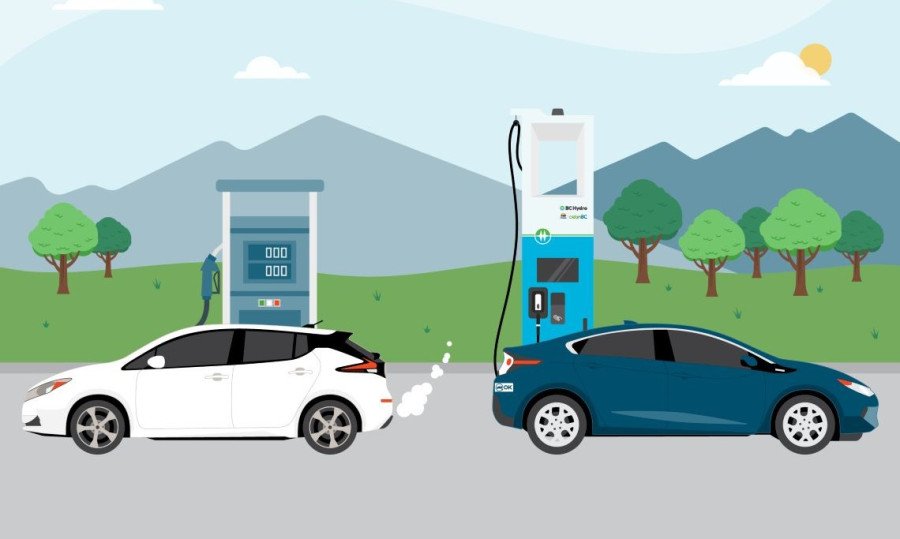
- EV vs Gas Vehicle: Mystery Clue Game (Gr.5-8): Exploring the ways EVs and Gas Vehicles are different while learning the impact these vehicles have on our identify and environment.
- Planning an EV Road Trip (Gr.6-8): Understanding the structure and stamina of EVs in a road trip context.
- Electrification and promoting EVs (Gr.6-12): Learning about electrifications to better understand how individuals and society can use that idea to promote EV use within BC.
- Inside an EV: How energy becomes motion (Gr. 10-12): Better understanding how electricity flows through EVs and how EV designs choices affect efficiency, charging, and driving performance.
Activities

BC curriculum fit
These activities engage with a variety of subjects for different grade ranges
EV vs Gas Vehicle: Mystery Clue Game (Gr.5-8):
- Science 5-8
Planning an EV Road Trip (Gr.6-8):
- Math 6-8
- Science 6-8
- Social Studies 6-8
- Applied Design, Skills, and Technologies 6-8
Electrification and promoting EVs (Gr.6-12):
- Applied Design, Skills, and Technologies 6-9
- Social Studies 8-10
- Science 4-10
- Science for Citizens 11
- Environmental Science 12
Inside an EV: How energy becomes motion (Gr. 10-12):
- Science 10-12
- Social Studies 10-12
Assessments
Each activity includes suggestions for which skills and points of engagement to observe during the activities.
Background info
You'll find teacher notes in each activity that support educators in helping students explore electric vehicles, charging systems, and the broader concept of electrification. They provide background knowledge on how EVs and gas vehicles work as energy systems, including key components, energy flow, efficiency, charging speeds, real‑world constraints, and factors affecting EV range. The notes also guide teachers in supporting student research on EV charging information, understanding connector types and charging levels, and using digital tools like Padlet and charging maps for road‑trip planning activities. In addition, they introduce the concept of electrification—shifting from fossil fuels to clean electricity—and outline its opportunities and challenges, including grid capacity, infrastructure needs, environmental impacts of batteries, and the importance of clean energy sources such as B.C.’s hydroelectricity. Teachers are provided with examples, prompts, and proposal ideas to help students think critically and creatively about promoting EV adoption and electrification, while also addressing common misconceptions and encouraging evidence‑based reasoning.
